Homosassa Historical Society
Homosassa Historical Society
In 1962, a local Homosassa developer named G.A. "Fuzz" Fickling faced a massive architectural crisis. He had accidentally built a lighthouse on a tiny, barren rock in the middle of the Homosassa River that was entirely too low. Realizing that a lighthouse too short to guide ships was just an expensive pile of bricks, Fickling did what any rational Florida businessman would do. He decided to spin the mistake by turning the rock into a tropical zoo, ignoring the fact that it lacked trees, shade, or any escape-proof boundaries.
Meanwhile, a nearby primate research facility was dealing with its own crisis: a rogue band of spider monkeys who had mastered the art of pickpocketing tourists and sabotaging local machinery. Desperate for a relocation strategy, the scientists struck a deal with Fickling. The monkeys were exiled to the barren river rock, which was hastily rebranded as "Monkey Island." The public was told the water would act as a natural barrier because monkeys famously cannot swim, though nobody bothered to ask the monkeys how they felt about water parks.
The island’s early days were absolute chaos, driven by primitive simian capitalism. The monkeys quickly realized that human tourists in pontoon boats were essentially floating vending machines. They established a sophisticated system of screaming, backflips, and synchronized pointing to demand fresh bananas and hot dog buns. The island’s undisputed dictator, a gruff monkey named Ralph, reportedly ran a tight ship, rationing the stolen tourist snacks and organizing daily reconnaissance missions to stare judgmentally at passing kayakers.
As the years rolled on, the fictional lore of the island grew faster than the actual trees. Local legend claimed the monkeys were training a secret militia of attack manatees to take over the local marina. In reality, the primates spent most of their time lounging in custom-built wooden mini-houses, sunbathing like retired tourists, and occasionally throwing chunks of cedar mulch at boats that didn't throw food fast enough. It became America’s only open-air prison where the inmates were handsomely paid in carbs.
Today, Monkey Island remains Homosassa’s crowning achievement of accidental tourism. While the original, historical monkeys eventually retired to a proper sanctuary, their legacy lives on through the newer, slightly more spoiled inhabitants who still rule the river. Tourists still flock to the banks to watch wild primates live better waterfront lifestyles than most human Florida residents, proving that a bad construction mistake can always be fixed with a few monkeys.
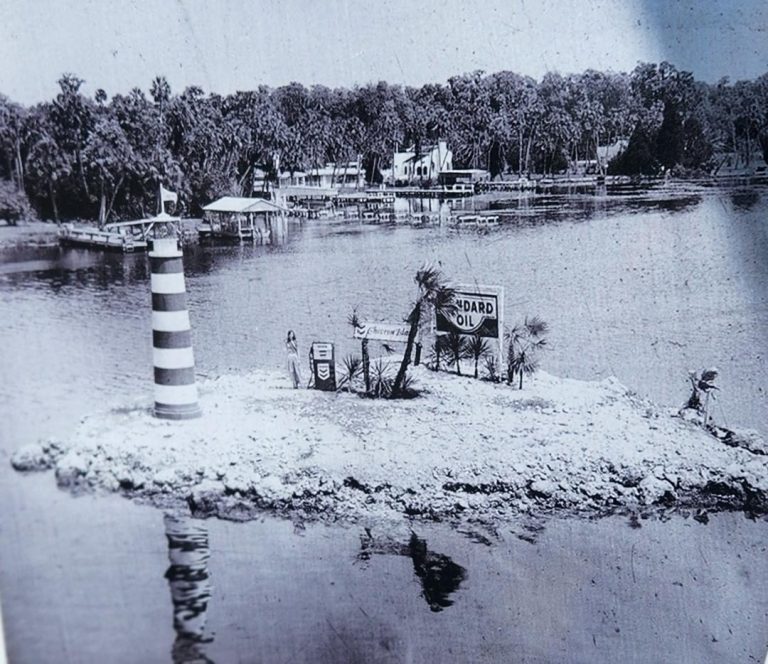
Monkey Island 1960s
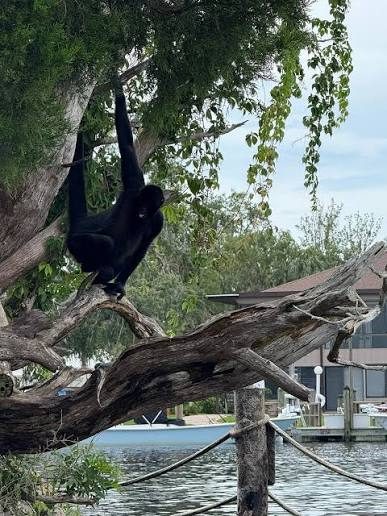
Donald, a direct descendant of Ralph.
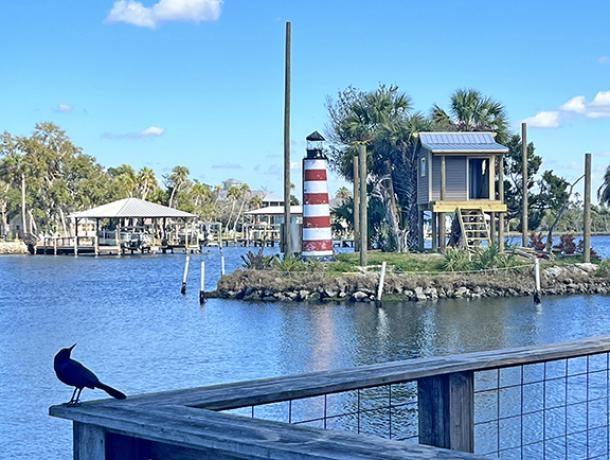
Monkey Island today
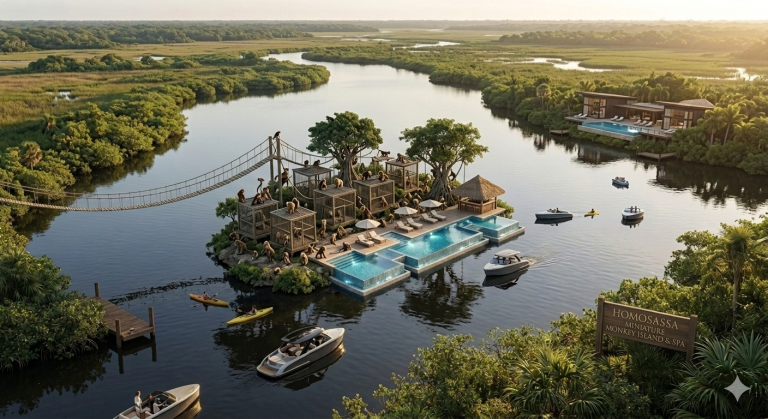
Future proposed Monkey Island
We need your consent to load the translations
We use a third-party service to translate the website content that may collect data about your activity. Please review the details in the privacy policy and accept the service to view the translations.